
FUNDED BY:

POWERED BY:

DICOM Samples
|
DICOM Library is a free online medical DICOM image or video file sharing service
for educational and scientific purposes.
|
|
STUDIES SHARED
by using Dicom Library
1
4
9
9
1
6
8
|
 |
|
By clicking Select DICOM file button You agree with our
Terms of Service
and the
Privacy Policy
ROADMAP NOTICE:
The personal account functionality will not be developed in the nearest future. Dicom Library’s team has made the decision to focus on the development of main Dicom Library features and improvement of its user experience.
DICOM Library USAGE
Select DICOM format image, video file or archived into a zip (*.zip) folder files (ZIP should contain only 1 study).
Do not upload files with information written on image!Service anonymize and only then upload files. It skips non DICOM format files. Uploaded files management is opened after successful upload - DICOM Study MANAGEMENT Panel. There you can share, download and delete files.
Watch video how to upload, view, share and download anonymized DICOM files online: DICOM files and DICOM file Tags listed in the Terms of Service will be automatically anonymized in the user's browser before uploading to the DICOM Library server. The user who uploads data is responsible for uploaded data and can upload DICOM files WITHOUT PERSONAL DATA located ON PICTURE, ON VIDEO, IN DICOM SR TEXT, IN DICOM PDF's or in any other Tags not listed as automatically anonymized (see the Terms of Service). The DICOM Library software intended for anonymization, sharing and viewing of DICOM files online complies with the requirements of the Regulation (EU) 2016/679 of the European Parliament and of the Council of 27 April 2016 on the protection of natural persons with regard to the processing of personal data and on the free movement of such data, and repealing Directive 95/46/EC (General Data Protection Regulation). Please note that:
|
News & UpdatesMedDream DICOM Viewer 8.7.0 is released! Date: 2025-06-12

The most important new features, new measurements, and improvements are described below: New features of viewing functionality:
Improved features:
News:
VIDEO of ONLINE WEBINAR: 'What’s new in MedDream v8.7.0?'. Date: 2025-07-22
Watch webinar's video recording:
Webinar was dedicated to MedDream DICOM Viewer v8.7.0 new release’s the most important features presentation and live demonstration. Agenda:
7-telugu-aunty-phone-sex-talk-audio--www.dllforum.com-.mp3 May 2026The mobile phone is arguably the most empowering tool for Indian women. It is her bank (UPI payments), her safety device (emergency sharing apps), her teacher (YouTube certification courses), and her escape (OTT platforms like Netflix/Prime). While males previously dominated internet usage, rural India is now seeing a surge in "female-first" internet users thanks to cheap data plans. Gone are the days of choosing between a saree and jeans. The current lifestyle revolves around "Indo-Western" fusion. A woman might wear Nike sneakers with a handloom cotton saree for a morning meeting, switch to tailor-made trousers with a Lucknowi chikankari kurta for lunch, and slip into a sequined blazer over a silk lehenga for a night party. The Bindi (forehead dot) has shifted from a religious symbol to a fashion statement, available in glittering sticker sheets. Beyond the corporate ladder, Indian women are dominating the creator economy. Lifestyle blogging, YouTube cooking channels, and beauty tutorials by Indian women for Indian skin tones have exploded. Women from small towns like Lucknow or Indore are using Instagram Reels to monetize traditional crafts, recipes, or fashion sense, creating a new genre of "small-city influencer" culture. Part III: Fashion and Beauty – Ancient Wisdom Meets Global Chic The wardrobe of the modern Indian woman is a metaphor for her life: blended. 7-Telugu-Aunty-Phone-Sex-Talk-Audio--www.dllforum.com-.mp3 Traditionally, the Indian woman is the Grihalakshmi (goddess of the home). This role involves managing not just household finances, but also intricate social networks. She remembers every relative's birthday, arranges the logistics of festivals (Diwali cleaning, Holi sweets, Karva Chauth fasting), and is the primary custodian of "Sanskar" (values). However, modern Indian women are delegating. The rise of food delivery apps, Swiggy Instamart for groceries, and professional house help has freed up cognitive load, allowing women to focus on careers and self-care. In the global imagination, the Indian woman is often pictured draped in a vibrant silk saree, bangles clinking as she lights a diya (lamp) in a traditional puja (prayer). While that image is not entirely obsolete, it represents only a single thread in a vastly complex and rapidly evolving tapestry. Today, the lifestyle and culture of Indian women are defined by a unique duality: a deep reverence for tradition alongside an aggressive march toward modernity. The mobile phone is arguably the most empowering While the concept of Talaaq (divorce) is often viewed negatively, it has inadvertently fueled a travel boom. Divorced and single Indian women are forming "Women Only" travel groups (like Wander Womaniya and Girls on the Go ), trekking to the Himalayas or backpacking through Southeast Asia—activities previously considered unsafe or inappropriate. Unlike Western cultures where religious observance is often private, Indian women's culture is public and performative during festivals. Karva Chauth (where a woman fasts for her husband's long life) is a fascinating example of how culture evolves. While older generations fasted out of obligation, millennial and Gen Z women have repurposed it as a social bonding event involving "sargi" (pre-dawn meal), Instagram-worthy thalis, and bridal-style makeup. Similarly, Navratri isn't just worship; it's a nine-day lifestyle block involving Garba night choreography, diet changes, and wardrobe planning. Part II: The Professional Revolution – Breaking the Glass Ceiling The most dramatic shift in Indian women's lifestyle over the last decade is economic participation. India now has one of the highest numbers of female STEM graduates in the world. Gone are the days of choosing between a saree and jeans This is the most sensitive cultural shift. Historically, phrases like "Log kya kahenge?" (What will people say?) prevented women from seeking therapy. Depression was dismissed as "tension" or being "weak." Now, urban Indian women are openly discussing therapy, burnout, and marital counseling on podcasts and LinkedIn. The "Sandwich Generation" woman—caring for aging parents and growing children simultaneously—is finally admitting that she cannot do it all alone. Apps like Mindhouse and Wysa are seeing massive adoption among Indian women. Part V: Social Life, Travel, and Technology The Indian woman's social life has undergone a digital transformation. DICOM Library users worldwide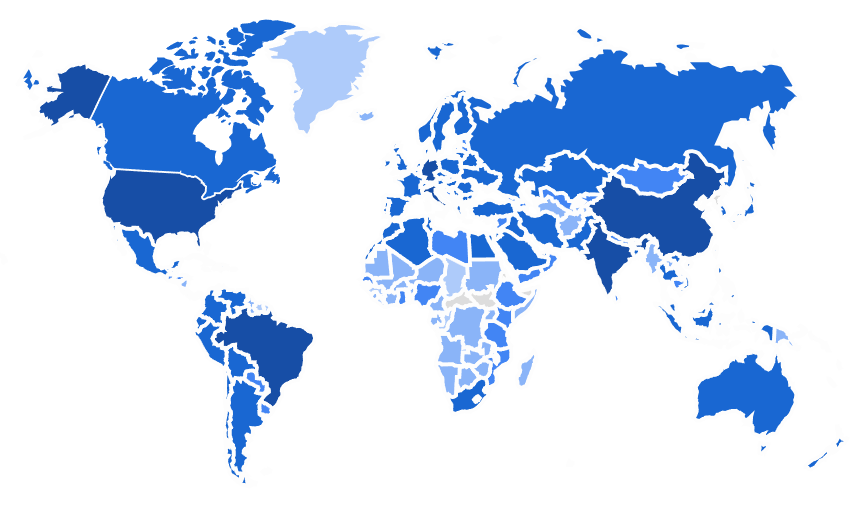
Last updated: 2025-05-29.
|
What can you upload?
You can upload DICOM file or files packed as zip.
Zip must contain DICOM files of studies, series and others.
How upload works?
Firstly test if it DICOM file or it will be skipped. Secondly try anonymize and then upload file to server. Same goes for zip file: try to extract and read file by file, test for DICOM format or skip, anonymize and upload. All extracting and anonymization is made on your browser.
Share?
You can share uploaded files via social networks: facebook, twitter and send by e-mail.
Anonymization?
At this point - deletes information about patient and attributes to identify a person in each DICOM file. Anonymization is done in your browser.
Do not upload files with information written on image!
Do not upload files with information written on image!