
To make DJMAX RESPECT mode work, special converter is necessary
To use DJMAX RESPECT mode, the latest firmware is necessary

After you connect the controller according to the following steps, you can make DJMAX RESPECT mode work normally.
Converter doesn’t support PS4 PRO game body for the time being.
The blue pilot light of the converter should turn green, and keep shining after flashing about 30 seconds, then you can play game nicholas j spykman the geography of the peace pdf
Press start+select+5, simultaneously about a second, PS2 IIDX mode and DJMAX RESPECT mode of the controller can be switched repeatedly
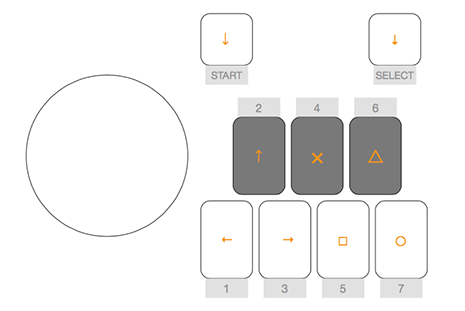
Key mapping is shown as following image
| Controller | PS4 key |
| Start | left stick ↓ |
| Select | right stick ↓ |
| 1 | ← |
| 2 | ↑ |
| 3 | → |
| 4 | × |
| 5 | □ |
| 6 | △ |
| 7 | ○ |
| Rotate turntable clockwise | left stick ↓ |
| Rotate turntable counterclockwise | left stick ↑ |
| Controller | PS4 key |
| Start+Select+4 | Option |
| Start+1 | L1 |
| Start+2 | R1 |
| Start+6 | R2 |
| Start+7 | L2 |
| Start+Select+5 | Switch for PS2 IIDX/DJMAX RESPECT game mode |
The details of the other questions are shown in “Common Question” in the bottom of this page
nicholas j spykman the geography of the peace pdf, Rimland theory, geopolitical strategy, Cold War origins, American foreign policy 1944.
While downloading the PDF is the first step, the real value lies in absorbing Spykman’s cold, clear-eyed realism. Unlike many academics who wrote for tenure, Spykman wrote to save lives through strategy. He died just months before D-Day, never seeing his predictions unfold into the Cold War.
In the crowded pantheon of strategic thinkers, few names are as revered yet as frequently misunderstood as . While his Yale colleague Nicholas John Spykman is often overshadowed by the earlier work of Halford Mackinder or the later notoriety of Henry Kissinger, his 1944 masterpiece, The Geography of the Peace , remains the most practical blueprint for American foreign policy in the 20th century.
By: The Geopolitics Review
For scholars, military strategists, and students of international relations, finding a clean, readable has become a digital grail quest. This article explores why that document is so vital, where to locate legitimate academic copies, and—most importantly—what Spykman actually argued about how to secure a nation after a world war. Why "The Geography of the Peace" Still Matters Published posthumously (Spykman died of cancer in 1943 at the age of 49), The Geography of the Peace was his rebuttal to idealists who believed the United Nations alone could prevent World War III.
Similarly, US “pivot to Asia” strategy is pure Spykmanism—containing China by controlling the maritime Rimland of the South China Sea. Even the term “Indo-Pacific,” used by the US Navy today, echoes Spykman’s fusion of the Indian and Pacific Oceans into a single strategic theater.
Visit your local university library’s digital portal or the Internet Archive. Find the PDF. Read pages 41–52 (the Rimland theory). Then look at a modern world map. You will never see international news the same way again. If you found this guide useful, consider reading Spykman’s earlier work, America’s Strategy in World Politics (1942), which serves as the prequel to The Geography of the Peace.